
Even as domestic passenger car sales declined 29.4 per cent between April and August this year, exports grew 6.5 per cent, partially cushioning the blow from slowing sales.

Automobile makers in India are embracing taxi-hailing apps such as Uber and Ola, hoping to ride on their expansion to sell more cars, a contrarian view to companies in Western markets that fear a drop in car sales due to them
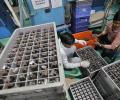
Auto component makers in India are bracing for a tough time. High absenteeism among workers owing to Covid-19, shortages of critical parts, and temporary closures of plants by automobile manufacturers have thrown a spanner in the works for the Rs 3.2-trillion sector, which derives 60 per cent of its revenues from automobile original equipment manufacturers (OEMs), with the balance split equally between replacement demand and exports. Car market leader Maruti Suzuki India on Saturday said it was extending the maintenance shutdown, which was from May 1 to 9, till May 16, "keeping in view the current pandemic situation". Some activities will continue in the plants.

The Competition Commission of India (CCI) on Monday slapped a penalty of Rs 2,545 crore on 14 top carmakers of the country for violating trade norms in the spare-part andafter-sale service market.

As Covid-19 cases surge in India, companies have realised it's a tightrope walk between maintaining production and ensuring employee safety.

Maruti Suzuki, Tata Motors and Hyundai stand to gain the maximum, given their large portfolio of products in the sub-4 meter segment.
After the easing of lockdown in mid-May, auto companies were able to resume production in a phased manner, but the ramp-up was slow due to a broken supply chain, and lockdown-induced restrictions.

Increasing the duties on auto parts and putting an additional cess on petrol and diesel could drive up costs of vehicles, specially where volumes are low and localisation is not viable.


The models from Hyundai and Maruti, which might go on sale in October 2018 and February 2019, respectively, are set to revive a segment that had lost sheen to the compact SUV segment, lately

The industry players couldn't hide their disappointment.

Auto, tourism exceptions but major sectors otherwise saw decline in FY13 inflows.

Over 22 passenger and commercial vehicle makers and 18 two- and three-wheeler makers will take part amid proximate security.

Turns down firm's plea for stay on CCI order; final order pending

Falling margins, high inflation pitting workers against management.

Among those who have the most to lose from India's haphazard policies are dealers selling cars made by Toyota, Mahindra & Mahindra, Daimler AG's and Tata Motors' luxury arm, Jaguar Land Rover

While retail sales at dealerships have suffered the full impact of demonetisation, the growth in wholesale volumes comes as dealers had relatively lower inventory after Diwali in October.

Gaurav Garg, Head of Research, CapitalVia answers readers' stock market queries.
 © 2026 Rediff.com - Investor Information - Advertise with us - Disclaimer - Privacy Policy - Sitemap - Feedback - About us - Terms of use - Grievances